Most of what passes for “higher guidance” in tarot carries more grimoire logic than most readers would admit, or even recognize.
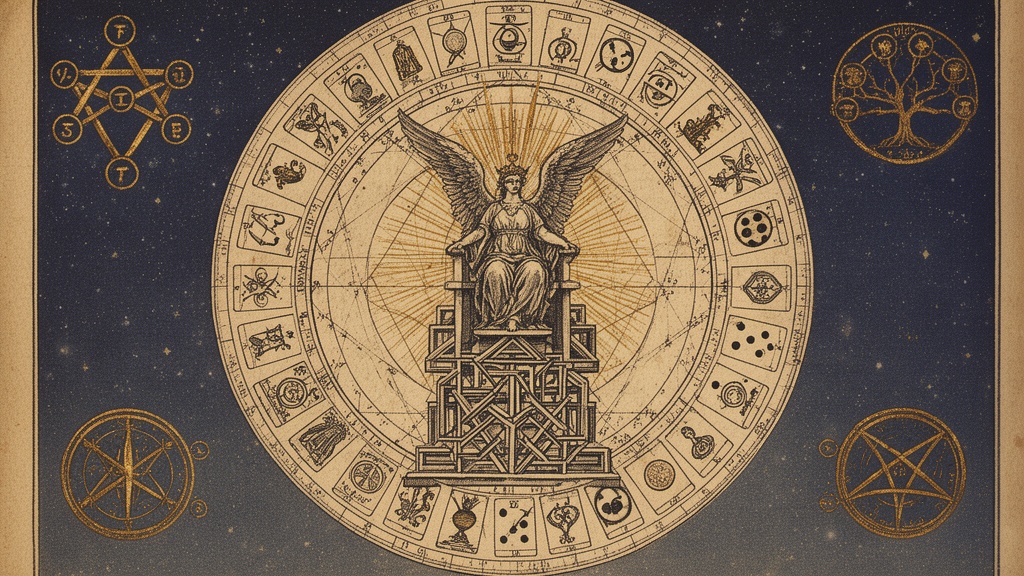
Most of what passes for “higher guidance” in tarot carries more grimoire logic than most readers would admit, or even recognize.

Most of what passes for “higher guidance” in tarot carries more grimoire logic than most readers would admit, or even recognize. One of the clearest skeletons behind that logic is the Abramelin operation—not as a one‑to‑one source text for tarot, but as a template for how authority, ordeal, and relationship to powers can be structured. … Read more
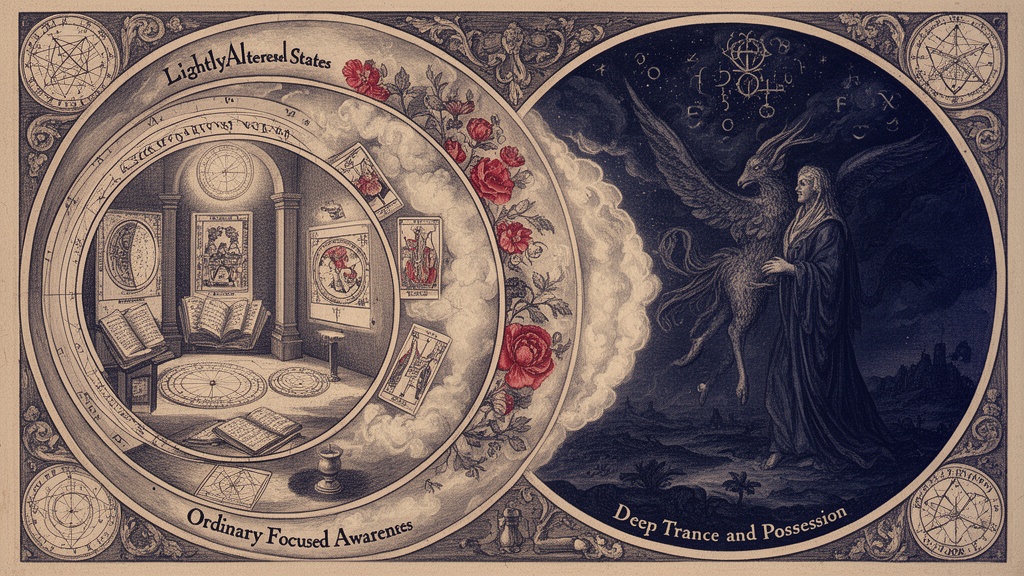
Some of the most incisive tarot readers I know do their best work stone-cold sober, mid‑commute, on too much coffee and not enough sleep.

Some of the most incisive tarot readers I know do their best work stone-cold sober, mid‑commute, on too much coffee and not enough sleep.

Some of the most incisive tarot readers I know do their best work stone-cold sober, mid‑commute, on too much coffee and not enough sleep. Others won’t touch a deck until they’ve dropped into a state they would, without irony, call possession. If you recognize yourself in one of those extremes—or, more likely, somewhere in the … Read more

If every spread is a hidden theory of how reality works, what exactly is your layout forcing the cards to say?

If every spread is a hidden theory of how reality works, what exactly is your layout forcing the cards to say?

If every spread is a hidden theory of how reality works, what exactly is your layout forcing the cards to say? Most of us inherited our first spreads the way we inherited our first decks: as faits accomplis. Celtic Cross, three-card line, horseshoe, perhaps a relationship spread from a book with yellowing pages. We learned … Read more

What if you treated your readings as data and your practice as a hypothesis; would it still survive your own audit?

What if you treated your readings as data and your practice as a hypothesis—would it still survive your own audit?

What if you treated your readings as data and your practice as a hypothesis; would it still survive your own audit? Not in the abstract. Not as “I’m usually accurate” or “my clients come back so it must work.” I mean: defined questions, logged outcomes, pre-stated predictions, and a running tally that does not care … Read more

If the Knight of Swords walks into your spread and you treat him as a badly behaved aspect of your personality, he will dutifully perform as such. If you treat him as a being with his own will, habits, and history, your reading quietly reconfigures itself around that decision.

If the Knight of Swords walks into your spread and you treat him as a badly behaved aspect of your personality, he will dutifully perform as such. If you treat him as a being with his own will, habits, and history, your deck quietly reconfigures itself around that decision.

If the Knight of Swords walks into your spread and you treat him as a badly behaved aspect of your personality, he will dutifully perform as such. If you treat him as a being with his own will, habits, and history, your reading quietly reconfigures itself around that decision. This is not a question of … Read more

If your “intuition” in readings is actually a trainable form of non‑conceptual cognition, the real question is not whether you have it, but how much better it gets when you start training it deliberately.

If your "intuition" in readings is actually a trainable form of non‑conceptual cognition, the real question is not whether you have it, but how much better it gets when you start training it deliberately.

If your “intuition” in readings is actually a trainable form of non‑conceptual cognition, the real question is not whether you have it, but how much better it gets when you start training it deliberately. Most of us who read seriously know the difference between a cold, mechanical spread and those sessions where something else switches … Read more

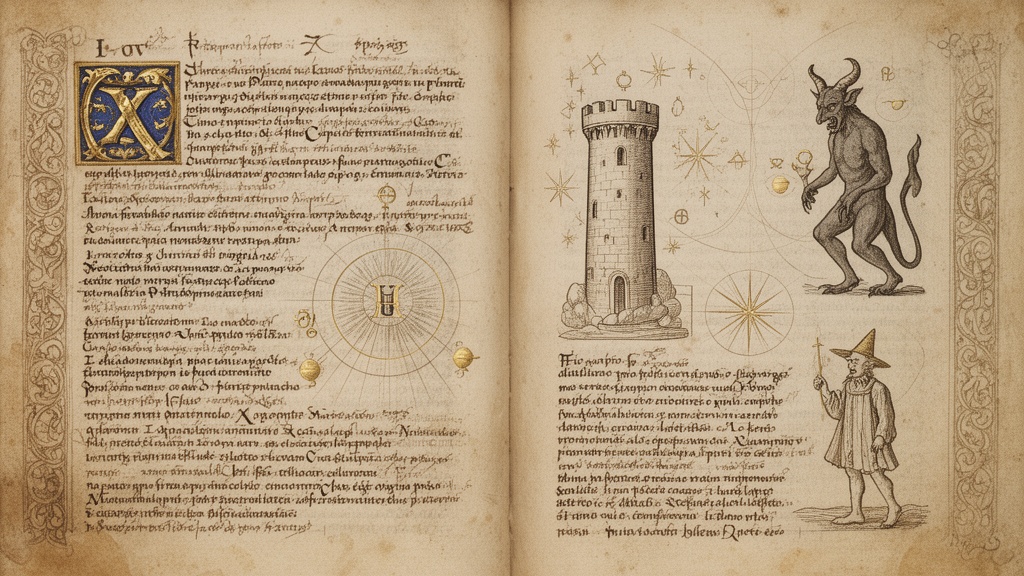
Reading the Margins: What Early Tarot Manuscripts Actually Say

Reading the Margins: What Early Tarot Manuscripts Actually Say

Some of the most destabilizing things the tarot has to say about itself are written in hands that never expected to be read, squeezed into margins that were never meant to be important. Those hands are starting to show up on our screens. We are not dealing with a lost master-treatise on “the original tarot … Read more

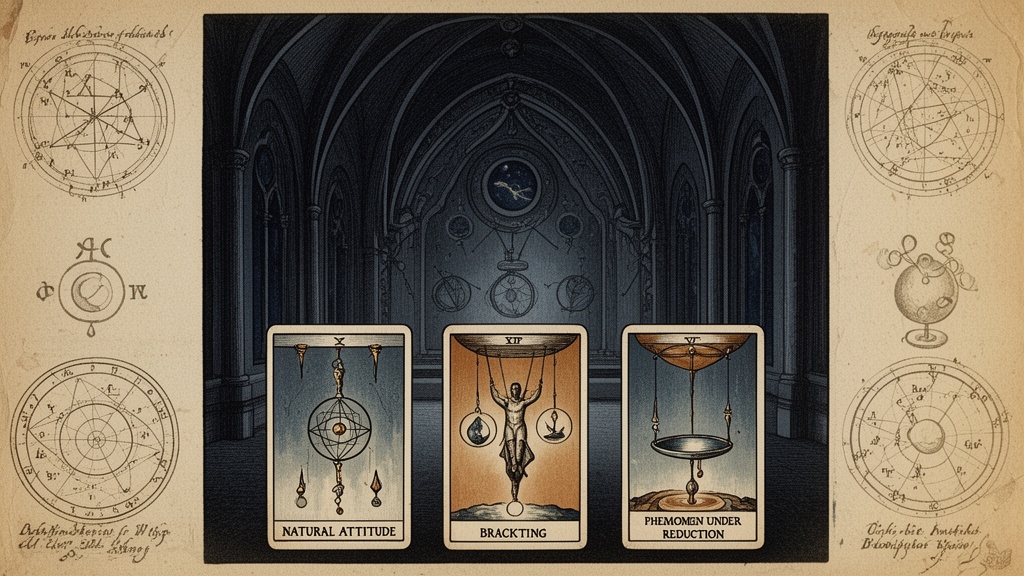
Tarot and Phenomenology: Epoché as Method, Not Metaphor

Tarot and Phenomenology: Epoché as Method, Not Metaphor

Tarot and Phenomenology: Epoché as Method, Not Metaphor Tarot already lends itself to self-deception. The cards are ambiguous, the querent is anxious, and you are sitting there with a head full of systems and stories. Under those conditions, “don’t project” is an ethical wish, not a method. Phenomenology gives you a method. Not another theory … Read more


Home   About   Terms   Privacy     Facebook   X   LinkedIn


Copyright © 2026 Tarotsmith. All rights reserved.